 |
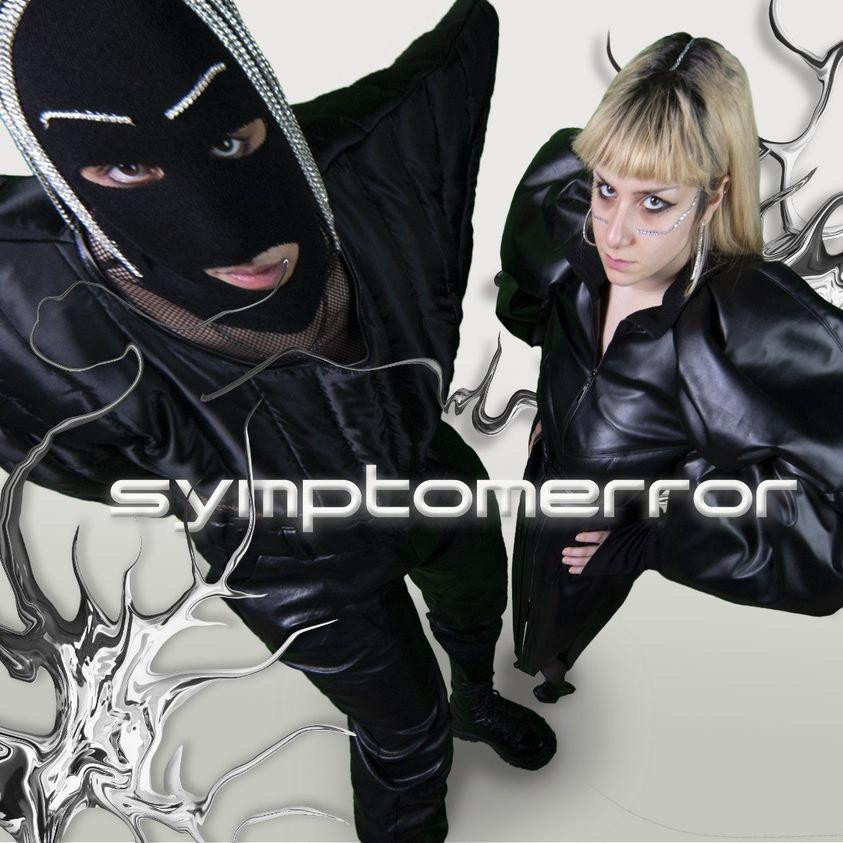
Interview with Symptom.Error
by Alyna Loucine Paddon
Basé à Erevan, le duo électronique expérimental Symptom.error produit continuellement de la musique originale, tout en créant avec audace un espace pour de nouvelles interprétations de mélodies traditionnelles — ce qui leur vaut une présence marquante dans la scène florissante de la musique électronique underground en Arménie depuis 2017.
Ce mois-ci, ils traversent l’océan pour jouer à La Poubelle Magnifique à Montréal le 19 novembre, puis au Drom Taberna à Toronto le 5 décembre.
J’ai rencontré mes amis de longue date, Sona et Amasia, pour discuter de leur tournée canadienne et de la sortie, le 4 novembre, de leur premier album, Ex-Crisis.
Yerevan-based experimental electronic duo Symptom.error are continuously producing original music, in addition to boldly creating space for new interpretations of traditional melodies, giving them a notable presence in Armenia’s flourishing Underground electronic music scene since 2017. This month, they are traveling overseas to play shows at La Poubelle Magnifique in Montreal on November 19th and at Drom Taberna in Toronto, December 5th. I sat down with longtime friends Sonia and Amasia to discuss their upcoming Canadian tour, and the November 4th release of their debut album, Ex-Crisis.
Comment vous êtes-vous rencontrées, et comment Symptom.error est-il né ? How did you two meet, and when did Symptom.error come about?
Amasia : Le groupe a commencé comme un projet au secondaire. Au début, on était en fait un groupe punk. On s’est mises à faire de la musique électronique lorsqu’un professeur nous a encouragées à expérimenter avec Ableton, et on a poursuivi dans cette voie parce qu’on sentait qu’il y avait moins de limites sonores.
Sona : Quand on a commencé à expérimenter avec Ableton, on a senti que l’électronique nous donnait plus de liberté pour déformer, manipuler le son et transmettre des émotions précises.
Amasia: The band started as a project in high school. At first we were actually a punk band. We began making electronic music when a teacher encouraged us to experiment with Ableton, and we started pursuing electronic music because we felt that there were fewer limitations in sound.
Sona: When we began to experiment with Ableton we felt that electronic music gave us more freedom to distort and manipulate sound to convey specific feelings.
Comment décririez-vous Symptom.error ?
How would you describe Symptom.error?
Amasia : C’est difficile à décrire parce que ça évolue avec nous, et comparé à ce qu’on faisait il y a quelques années, c’est très différent. L’identité de base demeure, mais le projet reflète vraiment nos expériences et notre croissance.
Sona : Je pense que Symptom.error est une expérience à partager avec le public. Être au concert, vivre le son et l’énergie dans la salle — c’est un sentiment magnifique.
Amasia: It's hard to describe because it changes with us, and compared to what we were doing a few years ago it's very different. It still keeps its core identity, but this project is really a reflection on our experiences and our growth.
Sona: I feel that Symptom.error is an experience to be shared with the audience. To be at the concert and to experience the sound and energy in the room is a beautiful feeling.
Est-ce ce partage intime qui vous a attirées vers la culture Underground ?
Is that something that drew you towards the Underground culture as well, being able to share an intimate experience like that with such a tight knit community?
Amasia : Absolument. Dans la scène underground, il y a la liberté d’expérimenter, d’explorer, de faire des erreurs, et d’être dans un espace intime où l’on ressent tout ça ensemble.
Amasia: For sure. In the Underground scene, there's freedom to experiment, to explore, to make mistakes, and to be in that close intimate space and experience those feelings.
Pouvez-vous parler un peu des concerts que vous avez donnés jusqu’ici ?
Could you speak a bit about the shows you’ve played so far?
Sona : Notre toute première performance était sur le toit de notre école, devant des enfants de huit ans maximum. Notre prof de musique nous avait encouragées à ouvrir un événement scolaire. Personne n’est venu, sauf les enfants de maternelle et leurs parents.
Amasia : La mère de Sona est venue aussi. Elle nous filmait avec son iPad.
Sona : À l’époque, notre musique était vraiment expérimentale — on chantait des chansons arméniennes traditionnelles transformées en électronique. Je pense qu’on n’avait qu’un seul morceau original. Puis, pour notre premier vrai show solo — 2 h 30 de performance — on a été surprises par le nombre de gens présents. On croyait que ce serait juste nos amis, mais plein de gens qu’on ne connaissait pas du tout sont venus. C’est là qu’on s’est dit : ok, peut-être que Symptom.error est plus qu’un projet de lycée.
Sona: Our first ever performance was on the rooftop of our school, to an audience of children who were no more than 8 years old. Our music teacher encouraged us to play the opening of a school event. Nobody came except for the kindergarten kids and their parents.
Amasia: Sona's mom came too. She was recording us on her iPad.
Sona: At that point the music was really experimental, we were singing traditional Armenian songs and turning them into electronic music, I think we only had one individual song. Then, when we did our first solo show and played for 2.5 hours, we were surprised by how many people were there. We figured that our audience would be mostly friends, but so many people that we didn’t recognize at all showed up. This was when we began to think, ‘ok, maybe Symptom.error is something more than a high school project.’
La scène électronique underground en Arménie est assez récente, non ?
The Underground electronic music scene in Armenia is fairly new, right?
Amasia : Oui. Il y avait eu des tentatives dans les années 2000, mais ça s’est vraiment solidifié quand on était au secondaire. Aujourd’hui, il existe trois salles à Erevan dédiées uniquement à l’électronique underground — ce qui n’existait même pas il y a deux ans. Avant, c’était des clubs ou des lieux aléatoires, et c’était awkward. Maintenant on a des lieux représentatifs de cette culture.
Amasia: Yeah, there have been attempts before in the early 2000's, but I think it really got hardcore when we were in high school. There are 3 venues in Yerevan now that are strictly underground electronic music, which we didn’t even have two years ago. Before, it was just clubs or random venues, and it was a bit awkward and difficult. Now we have venues that are representative of the underground music culture.
Que ressentez-vous à l’idée de sortir votre musique du cadre underground arménien pour l’amener au Canada ?
How does it feel to bring your music outside of the Underground scene in Armenia, to Canada?
Sona : C’est une énorme étape pour nous. Même si on adore la communauté d’Erevan, jouer constamment aux mêmes endroits, devant les mêmes gens, devient une zone de confort. On espère que cette nouvelle expérience va déclencher de nouvelles émotions, de nouvelles inspirations, et influencer notre futur travail.
Amasia : On pourra aussi découvrir une nouvelle forme de communication avec un public diversifié qu’on ne connaît pas. C’est important, parce que pendant nos performances on travaille beaucoup pour créer une énergie qui transmet un sentiment de sécurité. En Arménie, cette dynamique est plus rigide parce que la communauté est minuscule et très soudée : quand on regarde la foule maintenant, 80 % des gens, on les connaît.
Sona: It's a huge step for us. Although we love the community in Yerevan, constantly playing the same venues with the same people becomes a comfort zone. It's going to be a hugely new experience that we hope will trigger new emotions and inspiration, and influence our future work.
Amasia: We'll also be able to experience a new form of communication with a new diverse audience that we don’t really know. It's a big deal, especially because during our performances we work really hard to create an energy that somehow transfers a sense of safety, and that's the safe space that we create - but of course in Armenia it's more hardened and rigid from the repetition. The underground community in Armenia is really small, and really close-knit, so everyone knows each other. When we look into the crowd now 80% of people are people we know.

Vous êtes aussi sur le point de sortir votre premier album, Ex-Crisis. Qu’est-ce que ça représente pour vous ?
You're also about to release your first full length album, Ex-Crisis. How does that feel?
Amasia : On travaille sur un album depuis longtemps. Ex-Crisis est une collection de morceaux qu’on a joués des dizaines de fois à Erevan — des chansons écrites entre 2017 et 2019. On a hâte de les sortir pour enfin pouvoir avancer sur la nouvelle musique de notre prochain album, dont une partie sera jouée à Montréal et Toronto. Cet album est comme une boîte à souvenirs — pour ceux qui sont venus à nos concerts et pour ceux qui nous découvrent. Le nom Ex-Crisis reflète nos anciennes angoisses adolescentes ; notre son a beaucoup évolué depuis. On n’est plus des ados, donc la musique change forcément.
Sona : Oui, on attend la sortie pour pouvoir lâcher prise et repartir à neuf.
Amasia: We've been working on releasing an album for a long time. The album is called Ex-Crisis because it's a collection of songs that we’ve performed so many times in Yerevan, songs that were written from 2017-2019. We’re looking forward to releasing them and finally being able to work on the new music we've written since then for our next album, some of which we will also be performing at our Montreal and Toronto shows. This album is like a memory box for us, for people who've been to our shows and also for people just getting to know us. We chose the name Ex-Crisis because it's a reflection of our past teen angst, our sound has developed a lot since then. It’s because of all the music we produced in previous years that we're now able to move forward with a more mature sound. We're not teenagers anymore, so of course the music is going to be different.
Sona: Yeah, we're waiting to release this album so that we can let go and get a fresh start.
Y a-t-il une chanson de Ex-Crisis particulièrement importante pour vous ?Is there a song on Ex-Crisis that is especially meaningful to you?
Amasia : Je dirais notre reprise de Tsirani Tsar (“L’Abricotier”) du chanteur folklorique arménien Komitas Vardabed, réalisée pour l’anniversaire de sa naissance. On a collaboré avec un altiste, travaillé longtemps sur l’arrangement, et créé toute une performance avec un rituel de vinification et des décors — dans le sous-sol de l’Université d’État d’Erevan, ce qui était énorme pour nous.
On voulait briser l’idée institutionnelle selon laquelle la musique devait être vocale, instrumentale ou jazz — montrer que l’électronique peut être tout aussi émotive. Le concert était gratuit, sans alcool ni drogues.
Mais l’administration a appelé la police, nous accusant d’utiliser des drogues psychédéliques dans les raisins et de faire des rituels sataniques. Le lendemain, des médias publiaient des photos de nous à côté de celles de Komitas… à l’envers, avec des cornes démoniaques. C’était absurde.
Sona : Pourtant, notre version venait du cœur. Chaque chanson a du sens pour nous, mais celle-ci porte une histoire tellement riche.
Amasia: I think that would be our cover of Armenian folk singer Komitas Vardabed's song Tsirani Tsar, or "Apricot Tree" that we did as a tribute for the anniversary of his birthday. We collaborated with a viola player and worked on the song for a long time, and built an entire performance with a wine-making ritual, and decorations - we were able to do this performance in the basement of the Yerevan State University, which was a huge deal for us. We wanted to break the institutional idea that music had to be vocals, instrumental or jazz - we wanted to show that electronic music can be just as moving and meaningful as other more accepted genres. The show was free, and we made sure there would be no alcohol or any kind of drugs. We wanted to speak to the fact that Komitas was an innovative artist, and if he was alive today he would have appreciated electronic music. We opened our show with Tsirani Tsar, but we never got to finish the set, because the student council shut down the show and called the police on us. Unfortunately in Armenia, electronic music is only associated with clubs, drugs, partying…but for us it’s about the music, and we work really, really hard on our music.
Sona: When they called the police they were accusing us of having drugs at the show, putting psychedelic drugs in the grapes and performing satanic rituals. The next day we woke up to see several photos of us in the news alongside photos of Komitas, upside-down with evil horns… and articles claiming that we were performing a satanic ritual. I think our version of Tsirani Tsar is really important because that song has such a rich history, and we did it out of love for Komitas and that song. But of course, every song has meaning to us because they all come from our heart and experiences.
C’est une réaction plutôt extrême face à une reprise d’une chanson folklorique transmise depuis des générations sous tant de formes différentes. Pourquoi pensez-vous que l’université et les médias se sont autant opposés à votre version électronique de ce chant traditionnel arménien ?
That's a pretty extreme reaction to a cover of a folk song that's been passed down for generations in so many different forms. Why do you think the university and the media were so against your electronic version of this traditional Armenian folk song?
Sona : Beaucoup de gens sont coincés dans leurs zones de confort, dans la peur de nouvelles interprétations de la religion ou des traditions musicales. Ils ont peur que la jeune génération prenne leur place — la racine, c’est la haine et la peur de l’inconnu.
Amasia : Après ce concert, on a compris qu’il y a beaucoup de travail à faire. Les structures institutionnelles — musique, art, cinéma — peuvent être très pourries.
Sona : Il faut déraciner les anciennes façons de penser et créer du nouveau si on veut un vrai changement.
Amasia : On adore cette chanson, malgré tout.
Sona : Oui. Beaucoup de jeunes nous ont remerciées pour avoir créé quelque chose de nouveau dans un espace sain. Ça nous a encouragées. C’était une étape importante.
Sona: I think a lot of people are trapped in their comfort zones, trapped by their fear of new interpretations of religion and traditional music. They're scared of the younger generations taking their place - the root of it is hatred and fear that something new is coming that they don't understand. Our interpretation of religion, God and Komidas, is new - and theirs is very rooted in old traditions.
Amasia: After that concert, we realized that there's a lot of work to be done. As students, we’ve come to learn that the institutional structures in place, in music, art, film... in general can be very rotten.
Sona: We need to destroy old ways of thinking at the root, and create something new, if we want to see any real change.
Amasia: We love that song, though.
Sona: Yes, we're happy we did the show and the cover, because a lot of young people did come forward and thank us for creating something new, and in a clean environment, so we hope that we motivated people. I think it was a huge step for us.
Je pense que c’est une étape importante dans la bonne direction. C’est puissant de voir que vous êtes capables d’utiliser votre musique pour remettre en question des interprétations archaïques de l’art au sein des institutions académiques. Vous avez également chacune vos propres démarches artistiques individuelles — pourriez-vous nous parler un peu de vos pratiques respectives ?
I think that’s an important step in the right direction. It’s powerful that you’re able to use your music to challenge antiquated interpretations of art within academic institutions. You each have your own individual artistic pursuits as well, could you speak a bit about your individual artistic practices?
Sona : Je suis en troisième année à l’Institut d’État du théâtre et du cinéma d’Erevan, en réalisation. Cette année, je peux enfin tourner mon premier long métrage — j’ai travaillé sur le scénario pendant des années. Avant, on n’avait pas le choix : documentaires et publicités obligatoires. Maintenant je peux faire ce que je veux.
Amasia : J’ai terminé mon baccalauréat en arts visuels et médias expérimentaux à Prague. Je dessine, je peins, et dernièrement j’expérimente avec l’animation.
Sona: I'm doing my third year at Yerevan State Institute of Theatre and Cinematography, studying film directing. This year I get to do my first feature film and I'm super excited - I've been working on the script for years. In my program you don't get to choose your genre for the first few years, and you have to spend them making documentaries and commercials. Finally, this year, I get to do what I want and produce the film I’ve been writing for years.
Amasia: This year I completed my Bachelor of Fine Arts in Visual Arts and Experimental Media in Prague. I draw, paint, and lately I have been experimenting with animation.
Pensez-vous unir ces pratiques avec votre musique ? Un clip animé, par exemple ?
So do you feel like you'll bring these practices together with the music, maybe create a music video with animation?
Amasia : Oui ! On pensait justement faire une vidéo animée pour le prochain album.
Sona : Et on a aussi plusieurs clips en préparation, on travaille déjà sur les storyboards.
Amasia: Yeah, we were thinking of creating an animated video for our next album!
Sona: We also have a few music video clips that we're storyboarding right now and working on the concept for.
Dernière question : si vous pouviez collaborer avec n’importe quel artiste, qui serait-ce ?
And I just have one more question before we wrap things up; If you could collaborate with any artist, musician or otherwise, who would it be?
Sona : Ces derniers mois, on fait un marathon de David Lynch, donc définitivement lui — pour son style, ses couleurs, ses thèmes, et la musique qu’il choisit. On adore aussi Tricky, il nous inspire énormément.
Sona: For the last few months we've been doing a David Lynch Marathon, so definitely David Lynch - based on his style, the colours, themes and the music he chooses for his films. I think our songs would fit in with that. We also really love Tricky, he’s a huge inspiration for us.
-- -- -- --

Symptom.error sera en performance le samedi 19 novembre 2023
À la La Poubelle Magnifique
1221, avenue Crescent
Portes à 22 h, performance à 23 h
10 $ ou contribution volontaire (pwyc)